

Explore MySmileEd
Emergency!
Where to look first when a tooth gets hurt or something urgent happens.
Ask Cozy
What would you like to learn?
TRY ASKING
Browse by topic
Where to look first when a tooth gets hurt or something urgent happens.
What would you like to learn?
Emergency!
A tooth has been pushed out of its normal position but is still in the mouth. This page explains what to do first, what not to do, and what a dentist may do.
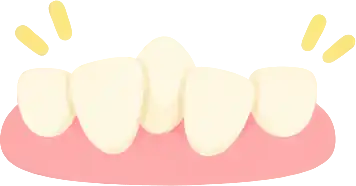
Call your dentist right away. A tooth that has moved needs to be checked as soon as possible. Call 911 first if your child is unconscious or cannot be woken, is breathing in an unusual way, or has a seizure. Go to an emergency department if your child also passed out, vomited two or more times, or has a bad headache, dizziness, confusion, or trouble walking or speaking, or if you think the jaw may be broken.
Stay calm and check your child. Look for other injuries too, especially to the head, lips and gums.
Please avoid these things:
The tooth is still there but has been moved — pushed sideways, forwards, backwards, or partly out of its socket. The tissues holding it in place have been disturbed, which is why it may feel loose or sit oddly against the other teeth when the mouth closes.
This is a different injury from a tooth knocked out completely and from one driven up into the gum, and it is handled differently. If you are not sure which has happened, that is a reason to ring rather than to work it out.
Adult (permanent) teeth. The International Association of Dental Traumatology (IADT) guidelines say a permanent tooth that has been pushed sideways or partly out of its socket is usually gently moved back into place after numbing, then held with a small, flexible splint for a few weeks while it heals. X-rays help the dentist see the root and the bone around it.
Baby teeth. For a baby tooth, the IADT advises a gentler approach. If the tooth does not get in the way when your child bites, the dentist may leave it to settle back on its own, which often happens within about six months. If it is very loose, badly out of place, or could be swallowed or breathed in, the dentist may remove it or reposition it.
The AAPD notes that complex cases may involve referral to a specialist.
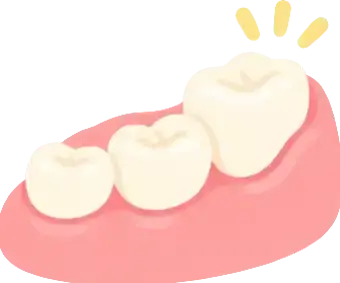
Your tooth got bumped and moved a bit. The dentist can check it and help it settle back where it belongs.
Should we push it back? No. Moving a displaced tooth is the dentist’s job. For an adult tooth, the dentist usually repositions it after numbing and may splint it. For a baby tooth, the dentist may decide to leave it to settle. Pushing it at home can hurt your child and the tissues that are already injured, and for a baby tooth, the adult tooth growing just underneath.
Yes. Treat it as urgent and call your dentist now. A moved adult tooth is usually put back into place and splinted, and that is easier soon after the injury. Call 911 or go to an emergency department for the warning signs in the box at the top of this page.
Looseness after an injury is one of the things a dentist assesses, and it is a reason to be seen rather than a reason to wait and watch. Ordinary wobbliness in a baby tooth that is due to come out is a different matter — see Loose teeth.
That is a different injury with different considerations. See Tooth pushed into the gums.
The IADT guidelines describe follow-up visits with X-rays over the months after the injury, and for adult teeth sometimes for several years, because the nerve inside the tooth can be affected. At home, help your child eat carefully, clean the area gently with a soft toothbrush, and use any rinse the dentist recommends. Call the dentist if you notice swelling of the gum, a bump on the gum, more looseness, or the tooth turning dark. In baby teeth, some darkening can fade over weeks to months, but the dentist should still check it.
The first-aid steps follow the American Academy of Pediatrics (AAP) HealthyChildren guidance on dental emergencies and the International Association of Dental Traumatology (IADT) 2020 guidelines for permanent and primary teeth, reprinted in the AAPD Reference Manual. The 911 and emergency department wording follows the AAP head-injury page. The tips not to push the tooth back and to avoid hard foods are general safety wording based on these sources.
Review status: pending. No named reviewer or review date yet.
This website is for education only and does not replace care from your dentist, physician, or emergency services.