

Explore MySmileEd
Emergency!
Where to look first when a tooth gets hurt or something urgent happens.
Ask Cozy
What would you like to learn?
TRY ASKING
Browse by topic
Where to look first when a tooth gets hurt or something urgent happens.
What would you like to learn?
Emergency!
A baby tooth has been knocked out completely. This page explains what has happened and what a dentist may do. The steps below explain what to do in the moment. Contact your dentist or your local emergency services.

Do not put a baby tooth back in. Call your child’s dentist the same day, even if your child seems fine. Call 911 if your child also hit their head and cannot be woken, is breathing in an unusual way, or had a seizure.
A baby tooth that is put back can be breathed in, and it can harm the grown-up tooth growing underneath. That is why it is left out.
Please avoid these things:
A primary tooth has come out of its socket before it was due to be lost. Baby teeth are designed to come out eventually, so the concern here is different from an adult tooth: it is about the injury itself, about the permanent tooth developing in the bone above, and about the gap that has been left earlier than expected.
A knocked-out baby tooth is not treated the same way as a knocked-out adult tooth. The dentist checks the gums and the grown-up tooth growing underneath, and follows up to watch how that tooth develops and comes in.
The AAPD describes preoperative assessment for injuries in this area as including a clinical examination and radiographic examination, in part to establish the relationship between the primary tooth and the permanent successor developing beneath it. It points to the International Association of Dental Traumatology guidelines, which include specific guidance for injuries in the primary dentition.
Where a baby tooth has been lost earlier than it would have been naturally, the question of whether the space needs holding open may follow. That is a separate decision, made later rather than in the moment — there is more on Space maintainers.
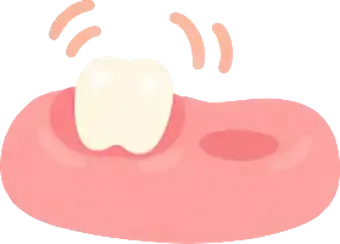
Baby teeth are meant to come out one day anyway. This one came out early because of a bump. A grown-up will call the dentist, and the dentist will check everything is alright.
Should we try to put it back? No. A baby tooth should not be put back. Call your dentist and tell them what happened. A baby tooth that comes out early because of an injury usually does not need to be replaced with a false one. Whether to hold the space is a later decision for your dentist.
Call your dentist the same day, even if your child seems fine. They will check the gums and the grown-up tooth underneath. If there is heavy bleeding, a facial injury, or your child seems unwell, or if your child also hit their head, contact your local emergency services.
It is one of the things the dentist will be checking. The AAPD notes that assessment in this region involves knowing the anatomy of a child’s developing jaw and the position of the developing tooth follicles, and that avoiding injury to them prevents longer-term complications. Whether this particular injury has any bearing on the permanent tooth is a question for your dentist.
Possibly, and it is a separate conversation from the injury itself. The AAPD states it is prudent to consider space maintenance when primary teeth are lost prematurely, and that whether to use an appliance should be considered rather than assumed. See Space maintainers.
The statement that a knocked-out baby tooth should not be put back follows the International Association of Dental Traumatology (IADT) guidance, including the 2020 primary-dentition guideline reprinted in the AAPD Reference Manual. Other clinical statements on this page come from the AAPD document below. The same-day call, the rinse and gauze step, and the 911 wording are editorial wording from our team and the AAP head-injury page. Review status: pending. No named reviewer or review date yet.
This website is for education only and does not replace care from your dentist, physician, or emergency services.